


Seed Grant Funding

NOW OPEN: 2025–2026 WHC Seed Grant Funding Cycle!
The Whole Health Consortium (WHC) is now accepting applications for its 2025–2026 seed grant program. These awards support collaborative, interdisciplinary teams conducting high-impact, community-engaged research. Successful projects will be positioned to pursue major external funding opportunities such as NIH Program Projects (P Series), Center Grants (U and P Series), NSF Growing Convergence Research (GCR) Grants, PCORI Grants, and more.
Explore 2025–2026 Priority Research Areas
Browse priority areas from previous funding cycles:
2023-2024 Priority Research Areas
2024-2025 Priority Research Areas
FUNDED SEED GRANT PROPOSALS | The Whole Health Consortium
-
General Item
 2024 | Track 1 | Geospatial Analysis and Optimization for Veterans’ Health Care Access in Pain Management
This project will identify underserved areas and create solutions to improve veterans’ access to pain management.
-
General Item
 2024 | Track 1 | Psychosocial and Physical Environments of Health Care
This project will involve investigating how hospital design, environment, and communication among patients, clinicians, and families affect wellness during patient care activities.
-
General Item
 2024 | Track 2 | Developmental Disability Abuse Prevention and Response
The aim of this project is to understand and address unique prevention and response strategies around sexual abuse affecting individuals with developmental and intellectual disabilities.
-
General Item
 2024 | Track 2 | Development of an Accessible, Integrative Treatment for Chronic Pain and Opioid Use Disorder in Appalachia
This project will lay the groundwork for novel interventions that reduce chronic pain and opioid misuse, tailored to Appalachian communities.
-
General Item
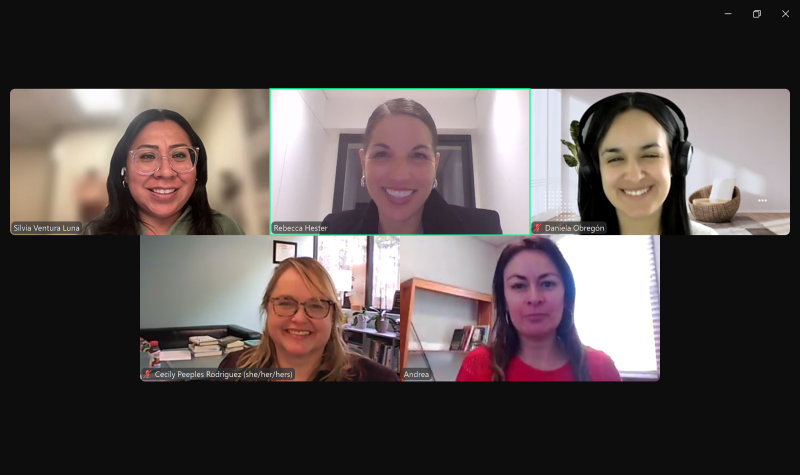 2024 | Track 2 | Ethical Dilemmas of Medical Interpretation in Indigenous Languages
The goal of this project is to examine how medical interpreters balance objectivity with culturally responsive advocacy for Indigenous patients.
-
General Item
 2023 | Track 1 | Stressed Out Moms - Targeting the Body to Treat the Brain and Prevent Intergenerational Transmission of Mental Health Issues
This project will address the need for alternative, non-pharmacological approaches to depression, particularly in mothers and children.
-
General Item
 2023 | Track 1 | Designing AI as a Mental Health Resource for Autistic Adults: Enhancing Therapeutic Approaches with Multimodal Interactions
The goal of this project is to collaboratively design an interactive artificial intelligence (AI) system using large language models to support the mental health needs of autistic adults, with a specific focus on repetitive negative self-talk.
-
General Item
 2023 | Track 2 | Community Advisory Groups to Inform Youth Mental Health Needs in Southwest Virginia
The goal of this project is to build collaborative partnerships between Virginia Tech’s Child Study Center, schools, and families in Southwest Virginia to identify current youth mental health needs and resources, and to leverage community perspectives in ongoing and future mental health related research.
-
General Item
 2023 | Track 2 | The Development of a Brief Self-Compassion Intervention to Improve Mental Health Among Caregivers Experiencing Food Insecurity
This project aims to create an intervention that is tailored and accessible to caregivers of young children experiencing food insecurity, such as nutrition education programs, food banks, and pantries.